From 452 pages to just 15
We distilled the key insights from the original book into only 15 pages. Just what matters.
Read it in 11 minutes
Get the essence of the book in just a fraction of the time.
Psychology, Philosophy
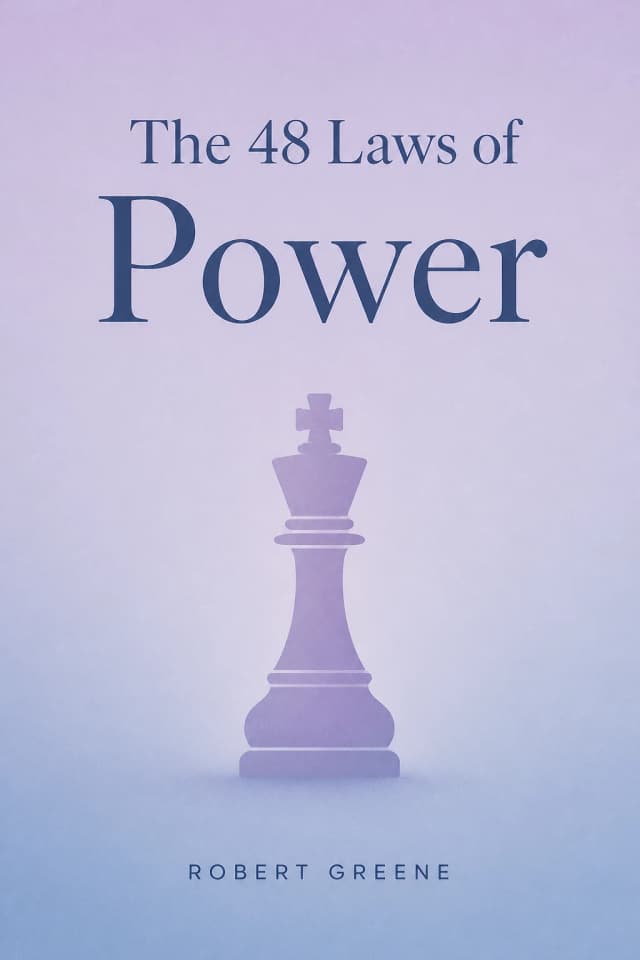
The 48 Laws of Power Summary
By Robert Greene · 1998 · 452 pages
About The 48 Laws of Power
Drawing on three thousand years of history and the writings of strategists such as Machiavelli, Sun Tzu, and Carl von Clausewitz, Robert Greene distills the dynamics of power into 48 timeless laws. Each law is illustrated with vivid historical examples of those who mastered it and those who fell by violating it. Provocative, amoral, and endlessly debated, the book serves as both a guide to gaining influence and a defense against manipulation. It is essential reading for anyone seeking to understand how power operates in business, politics, and everyday life.
The 48 Laws of Power summary by chapter
- Laws 1–3: Deference, Allies, Concealment
- Laws 4–6: Silence, Reputation, Attention
- Laws 7–9: Credit, Bait, Action over Argument
- Laws 10–12: Infection, Dependence, Disarming Honesty
- Laws 13–15: Self-Interest, Spying, Total Crushing
- Laws 16–18: Absence, Unpredictability, Isolation
- Laws 19–21: Know Your Mark, Neutrality, Playing Dumb
- Laws 22–24: Surrender, Concentration, The Courtier
- Laws 25–27: Self-Creation, Clean Hands, Cults
- Laws 28–30: Boldness, Foresight, Effortlessness
- Laws 31–33: Options, Fantasies, Thumbscrews
- Laws 34–36: Royalty, Timing, Disdain
- Laws 37–39: Spectacle, Conformity, Stirring Waters
- Laws 40–42: Free Lunches, Shoes, Shepherds
- Laws 43–45: Hearts, Mirrors, Measured Change
- Laws 46–48: Imperfection, Restraint, Formlessness
Frequently asked questions
Is the The 48 Laws of Power summary free?
Yes. The complete summary of The 48 Laws of Power is free to read on ChapterCuts, with no account or subscription.
Can the summary replace reading The 48 Laws of Power?
No. It is an independent ChapterCuts summary that condenses the main ideas of Robert Greene's 452-page book. Use it to decide whether to read the full book, or to review its ideas after reading it.